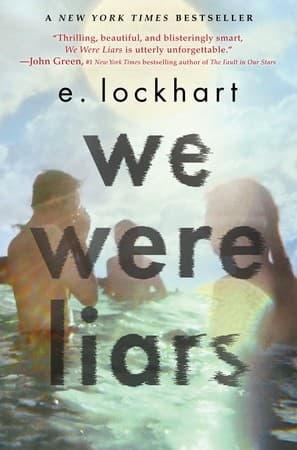
Editor-reviewed
We Were Liars
E. Lockhart·2014·Delacorte Press·young-adult
Reading level: Ages 13+ (YA) · 4-hour read · Beginner difficulty.
- Reading time
- 4h
- Difficulty
- Beginner
- Recommended age
- Ages 13+ (YA)
- Guide read
- 6min
- Editor's rating
- 4.0 / 5
- young-adult
- psychological-thriller
- family-secrets
- prime-video-adaptation
- summer-reading
— In one sentence —
The YA psychological thriller behind Prime Video's Sinclair-family adaptation.
§ 01 · WHY READ
Why read
We Were Liars is the E. Lockhart novel behind Prime Video's psychological thriller series. It starts with the Sinclair family, a private island, and Cadence, a teenager trying to recover a summer that her memory will not give back cleanly. The book is short, sharp, and built around withholding: money, grief, family performance, and the truth about what happened.
Prime Video's official materials identify the series as based on Lockhart's bestselling novel. That gives the book a fresh screen-reader job, but the page version still matters because its voice is the engine. Cadence's fractured narration is not decoration; it is how the suspense works.
Read it if you want a fast YA thriller that can be finished before the adaptation rewires your expectations. It is best approached with as little plot knowledge as possible.
§ 02 · CHARACTERS
Characters
Cadence Sinclair Eastman is the narrator and the problem. Her memory gaps make her vulnerable, but they also make the reader question how much the story can be trusted.
Johnny, Mirren, and Gat are the other Liars. They carry the pull of friendship, first love, and family resentment across the summers on Beechwood Island.
The Sinclair adults create the pressure around inheritance, image, and silence. The island looks like privilege, but the family rules make it feel narrow.
§ 03 · HIGHLIGHTS
Three highlights
No. 1 - Strong current adaptation route. Prime Video gives the novel a clear screen path for new YA thriller readers.
No. 2 - Fast reader decision. It is short enough to read before watching, and the twist depends on that order.
No. 3 - YA catalog value. It adds a contemporary psychological thriller to the site's screen-adaptation shelf.
§ 04 · EDITIONS
Recommended editions
| Edition | Why pick it |
|---|---|
| Delacorte Press edition | The original English source path with ISBN 9780385741262. |
| Paperback / tie-in editions | Practical if the Prime Video series is the reason you are starting. |
| Ebook | Good for a single-sitting read. |
| Audiobook | Works best if you can focus closely on voice and memory shifts. |
§ 05 · FIT
Who it's for / not for
Read this if you are...
- Coming from Prime Video and want the original Sinclair-family story.
- Looking for a short YA thriller with a strong reveal.
- Interested in wealth, family image, and inherited damage.
- Choosing a quick book-club read that rewards careful discussion.
Skip it if you are...
- Already know the ending and mainly want plot surprise.
- Wanting a long, detailed family saga.
- Frustrated by stylized narration and fragmented memory.
- Sensitive to grief, accident trauma, and family cruelty.
§ 06 · TIPS
Reading tips
- Avoid spoilers. The book is built around what Cadence cannot or will not hold clearly.
- Read the island as a system. Beechwood is a summer setting and the mechanism the family uses to protect itself.
- Notice the short chapters. The rhythm is part of Cadence's damaged perception.
- Compare carefully after watching. The adaptation has more room for family branches, while the book is tighter and more inward.
§ 07 · COMPARE
Read alongside
- Holly Jackson - A Good Girl's Guide to Murder. For another YA thriller with screen visibility.
- Holly Jackson - Good Girl, Bad Blood. For a sequel path if you want more YA mystery energy.
- Celeste Ng - Little Fires Everywhere. For family image, secrets, and class pressure.
- Ruth Ware - The Woman in Cabin 10. For adult thriller readers who like constrained settings.
- Donna Tartt - The Secret History. External follow-up for privilege, secrecy, and damage in a darker register.
§ 08 · DISCUSSION
Discussion questions
- How does Cadence's narration control what the reader is allowed to know?
- Is the island a refuge, a trap, or both?
- What does the book say about family wealth and emotional honesty?
- Which relationship among the Liars feels most fragile?
- How does the short length change the force of the ending?
- What should Prime Video preserve from the book's voice?
- Does the reveal feel earned?
- Would the story work without the Sinclair family's wealth?
One line to remember
“A wealthy island family, a damaged summer, and a narrator trying to remember what everyone else has learned not to say.”— bibliotecas editorial summary, not a textual quotation
You might also like
Read next
Alice Oseman · 2018
Heartstopper Volume 1
Alice Oseman's first Heartstopper graphic novel, where Nick and Charlie's friendship begins before Netflix expands the story.
Read · 6 min
Suzanne Collins · 2008
The Hunger Games
The novel that proved YA dystopia could be political, not romantic — and that a sixteen-year-old narrator could carry the weight of a real argument about what television does to war.
Read · 6 min
Leigh Bardugo · 2015
Six of Crows
Leigh Bardugo's Grishaverse heist novel, and the source of Netflix's Crow crew.
Read · 6 min