Editor-reviewed
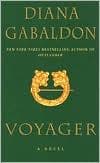
Voyager
Diana Gabaldon·1993·Delacorte Press·romance
Reading level: Ages 18+ (mature) · 35-hour read · Intermediate difficulty.
- Reading time
- 35h
- Difficulty
- Intermediate
- Recommended age
- Ages 18+ (mature)
- Guide read
- 7min
- Editor's rating
- 4.1 / 5
- outlander
- historical-romance
- time-travel
- starz-adaptation
- series-sequel
— In one sentence —
The third Outlander novel, where separation gives way to return, sea travel, and a larger historical-romance map.
§ 01 · WHY READ
Why read
Voyager is the third novel in Diana Gabaldon's Outlander series. Penguin Random House lists it as Book 3, and Starz's Outlander screen route keeps the whole saga active as a literary, book-based drama. Gabaldon's own site records the Starz adaptation and the long-running book chronology.
The book is the answer to the wound left by Dragonfly in Amber. Claire has returned to the twentieth century, raised Brianna, and built a life after Culloden. Then evidence suggests Jamie survived. The central question is direct and painful: if the lost person might still be alive, what do you owe the life you made without him?
This is not a casual entry point. It depends on the first two books and on the reader understanding the emotional damage of separation. For committed readers, it is also one of the series' major turning points because it moves from Scotland and France into a wider adventure structure.
§ 02 · CHARACTERS
Characters
Claire Fraser is older, more capable, and less able to pretend that love is simple. Her return is romantic, but it is also a choice against safety.
Jamie Fraser has survived years that Claire did not see. The reunion matters because both people have changed.
Brianna Randall Fraser makes Claire's decision harder. She is not background; she is the life Claire built in the future.
Roger Wakefield helps turn family history into a search. His role grows because the past has become an active problem.
§ 03 · HIGHLIGHTS
Three highlights
No. 1 - The reunion question. The book makes return feel costly instead of treating it as automatic wish fulfillment.
No. 2 - A larger adventure shape. Sea travel, danger, and displacement push the series beyond its first Highland frame.
No. 3 - Strong Starz relevance. Season 3 was built around Voyager, so screen-first readers have a clear reason to compare page and episode.
§ 04 · EDITIONS
Recommended editions
| Edition | Why pick it |
|---|---|
| Delacorte mass-market paperback | Common English edition, with ISBN 9780440217565. |
| Penguin Random House paperback | Easy current route through the official series listing. |
| Ebook | Practical for a long, series-dependent novel. |
| Davina Porter audiobook | Strong if the first two books worked for you in audio. |
§ 05 · FIT
Who it's for / not for
Read this if you are...
- Continuing Outlander in order.
- Coming from Starz Season 3 and want the full source version.
- Interested in romance after long separation.
- Willing to follow a very long historical adventure.
Skip it if you are...
- New to the series.
- Avoiding sexual violence, imprisonment, grief, and war aftermath.
- Looking for a contained romance with one setting.
- Frustrated by coincidences and high-adventure turns.
§ 06 · TIPS
Reading tips
- Read Dragonfly in Amber first. This book depends on that ending.
- Let the early search breathe. The delay before reunion is part of the emotional design.
- Expect the map to widen. Voyager changes the kind of series Outlander is.
- Separate book and show pacing. Starz has to compress what the novel can stretch.
§ 07 · COMPARE
Read alongside
- Diana Gabaldon - Outlander. The starting point for Claire and Jamie.
- Diana Gabaldon - Dragonfly in Amber. The necessary prequel to this reunion.
- Philippa Gregory - The Constant Princess. For historical fiction where marriage and politics reshape identity.
- Jane Austen - Persuasion. For another story about love after time, regret, and delay.
- George R. R. Martin - A Clash of Kings. For screen-adapted series fiction that expands after a first-book foundation.
§ 08 · DISCUSSION
Discussion questions
- What does Claire risk by returning, beyond physical danger?
- Does the reunion work because Claire and Jamie are the same people, or because they are not?
- How does Brianna change the moral weight of Claire's decision?
- Where does the book shift from romance into adventure?
- Does the longer page version make Season 3 feel richer or looser?
- What does Jamie's hidden history add to the central relationship?
- How does Gabaldon use age differently here than in Outlander?
- Is Voyager a restoration story or a reinvention story?
One line to remember
“Claire has a life after Jamie. The book asks what it costs to go back anyway.”— bibliotecas editorial summary, not a textual quotation
You might also like
Read next
Diana Gabaldon · 1991
Outlander
A nine-hundred-page time-travel romance written by a quantitative ecologist who decided, at thirty-five, to try writing a novel.
Read · 7 min
Diana Gabaldon · 2005
A Breath of Snow and Ashes
The sixth Outlander novel, where revolution moves from distant warning to danger at Fraser's Ridge.
Read · 7 min
Diana Gabaldon · 1992
Dragonfly in Amber
The second Outlander novel, where romance becomes political strategy before Culloden.
Read · 7 min