Editor-reviewed
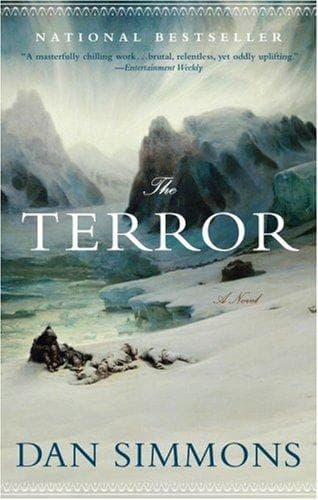
The Terror
Dan Simmons·2007·Little, Brown Paperbacks·thriller
Reading level: Ages 16+ (adult) · 18-hour read · Advanced difficulty.
- Reading time
- 18h
- Difficulty
- Advanced
- Recommended age
- Ages 16+
- Guide read
- 6min
- Editor's rating
- 4.2 / 5
- dan-simmons
- amc-adaptation
- historical-horror
- arctic
- survival
— In one sentence —
Dan Simmons's Arctic horror novel behind AMC's first Terror season.
§ 01 · WHY READ
Why read
The Terror is Dan Simmons's historical horror novel about the lost Franklin expedition, the crew of HMS Erebus and HMS Terror, and a supernatural threat moving through Arctic darkness. AMC's official materials connect the first season to Simmons's novel, and Hachette lists the Little, Brown paperback with ISBN 9780316017459.
The book is long because it wants survival to feel slow. Cold, hunger, scurvy, command pressure, ship damage, and isolation all matter before the monster fully matters. Simmons turns a real polar disaster into horror without letting the expedition history disappear.
Read it if AMC's first season left you wanting the source's deeper shipboard texture. Skip it if you only want fast creature scenes. This is a siege novel as much as a horror novel.
§ 02 · CHARACTERS
Characters
Francis Crozier is the captain of HMS Terror, carrying command pressure, alcoholism, and the burden of being right too late.
John Franklin leads the expedition with confidence that the Arctic does not reward.
Harry Goodsir is the ship's surgeon and one of the book's main witnesses to bodily collapse.
Lady Silence connects the stranded crew to knowledge they do not understand.
The crew matters collectively, because the novel is about what happens when a closed system starts to fail.
§ 03 · HIGHLIGHTS
Three highlights
No. 1 - Direct AMC source path. AMC's official interviews and production materials identify Simmons's book as the source for Season 1.
No. 2 - Strong historical horror fit. The novel works for readers who want dread built from weather, logistics, and command errors.
No. 3 - Evergreen screen demand. The show remains a durable reference point for viewers looking for serious horror source books.
§ 04 · EDITIONS
Recommended editions
| Edition | Why pick it |
|---|---|
| Little, Brown paperback | Current English route with ISBN 9780316017459. |
| Little, Brown hardcover | Original US hardcover route with ISBN 9780316017442. |
| Media tie-in paperback | Useful if AMC is the reason you are starting. |
| Audiobook | Practical for the length and expedition detail. |
§ 05 · FIT
Who it's for / not for
Read this if you are...
- Coming from AMC's The Terror Season 1.
- Interested in Arctic survival, naval history, and supernatural dread.
- Patient with a long book that tracks logistics and morale.
- Looking for horror where the environment is as frightening as the creature.
Skip it if you are...
- Avoiding gore, starvation, illness, racism, imperial violence, or animal death.
- Wanting a short monster thriller.
- Frustrated by large casts and shipboard detail.
- Looking for nonfiction about the Franklin expedition.
§ 06 · TIPS
Reading tips
- Track rank and command. Authority matters when every bad decision compounds.
- Let the cold stay boring. Repetition is part of how the novel makes survival feel.
- Separate history from invention. Simmons uses real expedition material, then builds supernatural horror around it.
- Compare Season 1 carefully. AMC condenses and reshapes character focus for television.
§ 07 · COMPARE
Read alongside
- Stephen King - The Stand. For another long screen-linked novel about systems breaking under pressure.
- Stephen King - Salem's Lot. For slow dread and a community under siege.
- Herman Melville - Moby-Dick. For a classic sea narrative where obsession and command define the voyage.
- Alma Katsu - The Hunger. External follow-up for historical horror built around a doomed expedition.
- Dan Simmons - Hyperion. External follow-up if you want Simmons's speculative range outside historical horror.
§ 08 · DISCUSSION
Discussion questions
- When does the expedition become doomed in the novel?
- How does Simmons make cold and hunger part of the horror?
- Which command failure matters most?
- Does the supernatural element deepen the historical material?
- What should AMC preserve from the book's slow pace?
- How does the large cast change your sense of risk?
- Where does the novel handle Indigenous presence well or poorly?
- Is the monster the main terror, or only one form of it?
One line to remember
“The Franklin expedition is trapped in ice, hunger, darkness, command failure, and something waiting outside the ships.”— bibliotecas editorial summary, not a textual quotation
You might also like
Read next
Agatha Christie · 1939
And Then There Were None
Ten strangers, one isolated island, and the cleanest demonstration in mystery fiction that a simple setup can still produce unbearable tension.
Read · 6 min
Daphne du Maurier · 1938
Rebecca
A second marriage, a country house, and a dead woman who seems more alive than everyone around her: du Maurier turns jealousy into one of the great slow-burn suspense novels.
Read · 6 min
John le Carre · 1974
Tinker Tailor Soldier Spy
John le Carre's George Smiley mole hunt, the source novel behind the BBC series and 2011 film.
Read · 6 min