Editor-reviewed
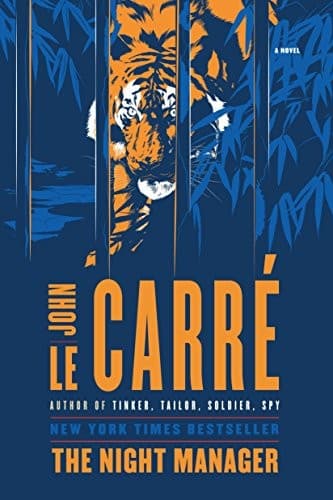
The Night Manager
John le Carre·1993·Ballantine Books·thriller
Reading level: Ages 16+ (adult) · 10-hour read · Intermediate difficulty.
- Reading time
- 10h
- Difficulty
- Intermediate
- Recommended age
- Ages 16+
- Guide read
- 6min
- Editor's rating
- 4.1 / 5
- thriller
- spy-fiction
- john-le-carre
- bbc-adaptation
- amc-adaptation
— In one sentence —
John le Carre's post-Cold War arms-dealer thriller behind the BBC and AMC series.
§ 01 · WHY READ
Why read
The Night Manager is John le Carre's 1993 spy thriller about Jonathan Pine, a hotel night manager drawn into an operation against arms dealer Richard Roper. Penguin Random House lists a Ballantine edition with ISBN 9781524796952, and AMC/BBC adaptation materials identify the series as based on le Carre's bestseller.
This is le Carre after the Cold War, asking what espionage looks like when money, weapons, private luxury, and compromised institutions replace the old East-West frame. Pine's cover is hospitality: discretion, service, and the ability to notice everything without seeming to watch.
Read it if the Tom Hiddleston and Hugh Laurie series made you want the slower source version. The novel is interested in glamour, disgust, moral performance, and the way evil can look civilized when it has enough money.
§ 02 · CHARACTERS
Characters
Jonathan Pine is trained to serve, observe, and disappear. Those habits make him useful undercover and vulnerable to becoming the role.
Richard Roper is charming because power has taught him to be. His danger comes from money, appetite, and insulation.
Jed brings intimacy into Pine's cover world and makes the operation harder to keep clean.
The intelligence handlers make the book a le Carre story: the mission is never separate from institutional compromise.
§ 03 · HIGHLIGHTS
Three highlights
No. 1 - Cover identity as character. Pine's job already requires a kind of spying before the official operation begins.
No. 2 - Post-Cold War espionage. The enemy is not an ideology so much as private power moving through weak systems.
No. 3 - Strong screen route. The BBC/AMC series gives viewers a direct path back to the novel.
§ 04 · EDITIONS
Recommended editions
| Edition | Why pick it |
|---|---|
| Ballantine paperback | Current U.S. English route with ISBN 9781524796952. |
| Penguin Classics editions | Good for readers collecting le Carre's spy shelf. |
| TV tie-in editions | Useful if you are coming from the BBC/AMC series. |
| Audiobook | Strong for le Carre's dialogue and controlled dread. |
§ 05 · FIT
Who it's for / not for
Read this if you are...
- Coming from the BBC/AMC adaptation.
- Interested in espionage after the Cold War.
- Looking for a spy novel about arms, money, hotels, and moral cover.
- Patient with slow infiltration rather than constant action.
Skip it if you are...
- Wanting a gadget-driven spy thriller.
- Looking for simple heroes and villains.
- Uninterested in institutional betrayal.
- Sensitive to violence, coercion, and arms-trade material.
§ 06 · TIPS
Reading tips
- Watch Pine's service habits. The hotel work explains why he can pass in Roper's world.
- Read Roper's charm as danger. The book is clear that elegance can hide brutality.
- Expect moral fog. Le Carre rarely lets the institution stay clean.
- Compare with the series after reading. The adaptation modernizes and reshapes several pressures.
§ 07 · COMPARE
Read alongside
- Frederick Forsyth - The Day of the Jackal. For a more procedural assassin-thriller contrast.
- John le Carre - Tinker Tailor Soldier Spy. For the colder Cold War le Carre baseline.
- Lee Child - Killing Floor. For a more direct thriller hero with a screen route.
- Michael Connelly - The Brass Verdict. For professional systems under pressure.
- Patricia Highsmith - The Talented Mr. Ripley. For another story about performance, class, and danger.
§ 08 · DISCUSSION
Discussion questions
- Why is hotel work such a useful cover for Pine?
- Does Roper's charm make him more frightening?
- How does the book define espionage after the Cold War?
- Which institution fails most clearly?
- Does Pine control his role, or does the role control him?
- How does luxury change the moral atmosphere?
- What does the series gain by updating the source?
- Is this a revenge story, a spy story, or a corruption story?
One line to remember
“A hotel night manager enters an arms dealer's circle and finds that undercover work can become a performance he cannot safely end.”— bibliotecas editorial summary, not a textual quotation
You might also like
Read next
John le Carre · 1974
Tinker Tailor Soldier Spy
John le Carre's George Smiley mole hunt, the source novel behind the BBC series and 2011 film.
Read · 6 min
Agatha Christie · 1939
And Then There Were None
Ten strangers, one isolated island, and the cleanest demonstration in mystery fiction that a simple setup can still produce unbearable tension.
Read · 6 min
Daphne du Maurier · 1938
Rebecca
A second marriage, a country house, and a dead woman who seems more alive than everyone around her: du Maurier turns jealousy into one of the great slow-burn suspense novels.
Read · 6 min