Editor-reviewed
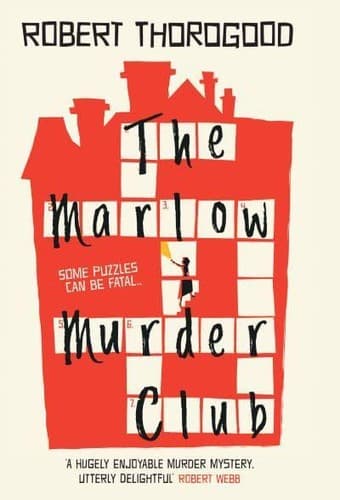
The Marlow Murder Club
Robert Thorogood·2021·HQ·thriller
Reading level: Ages 14+ (adult) · 7-hour read · easy difficulty.
- Reading time
- 7h
- Difficulty
- easy
- Recommended age
- Ages 14+
- Guide read
- 6min
- Editor's rating
- 4.0 / 5
- robert-thorogood
- cozy-mystery
- british-crime
- pbs-masterpiece
- series-starter
— In one sentence —
The first Judith Potts mystery, and the book doorway into the PBS Masterpiece series.
§ 01 · WHY READ
Why read
The Marlow Murder Club is the first Judith Potts mystery and the cleanest page-to-screen entry for PBS Masterpiece viewers. PBS identifies the series as an adaptation of Robert Thorogood's novel, and HarperCollins lists the HQ paperback with ISBN 9780008435912.
The book is a cozy mystery with enough bite to avoid becoming soft. Judith Potts is in her seventies, lives alone, sets crosswords, swims in the Thames, and trusts her own mind more than official reassurance. When she thinks she has heard a murder, she pulls in Suzie and Becks, two women who look like side characters until the case gives them room to act.
Read it before the PBS series if you want the trio's first case in its puzzle-first form. Skip it if you need a grim police procedural or a thriller built around forensic detail.
§ 02 · CHARACTERS
Characters
Judith Potts is the retired crossword setter whose confidence and stubbornness start the investigation.
Suzie Harris brings local knowledge, practical nerve, and a sharper eye than people expect from a dog walker.
Becks Starling is a vicar's wife whose politeness hides frustration, intelligence, and useful social access.
DS Tanika Malik is the professional investigator trying to decide when amateur help is a nuisance and when it is exactly what the case needs.
§ 03 · HIGHLIGHTS
Three highlights
No. 1 - Current PBS route. Masterpiece has kept the series active, with later seasons pointing viewers back to the books.
No. 2 - Reader-friendly mystery shape. The plot gives you suspects, clues, and a village-sized social map without requiring procedural patience.
No. 3 - Series unlock. Starting here sets up Death Comes to Marlow, The Queen of Poisons, and the later Judith Potts books.
§ 04 · EDITIONS
Recommended editions
| Edition | Why pick it |
|---|---|
| HQ paperback | Current English paperback route with ISBN 9780008435912. |
| US paperback | Useful if you want the easiest North American retail path. |
| Ebook | Good for a quick cozy mystery before watching the PBS episodes. |
| Audiobook | Strong if you like dialogue-led amateur sleuth stories. |
§ 05 · FIT
Who it's for / not for
Read this if you are...
- Coming from PBS Masterpiece and want the first Judith Potts case.
- Looking for cozy crime with older women at the center.
- Interested in a mystery that values friendship and clue work.
- Trying to find a lighter British crime series after darker thrillers.
Skip it if you are...
- Wanting a hardboiled detective story.
- Looking for graphic violence or forensic realism.
- Irritated by amateur sleuth setups.
- Hoping for a standalone that does not point toward a series.
§ 06 · TIPS
Reading tips
- Let Judith lead. Her odd confidence is part of the book's design.
- Track social access. The women solve things partly because people underestimate them.
- Read the setting as a clue source. Marlow supplies gossip, access, and geography.
- Expect the TV version to streamline. The book has more room for puzzle texture and interior suspicion.
§ 07 · COMPARE
Read alongside
- Agatha Christie - The Murder at the Vicarage. External classic for village mystery roots.
- Richard Osman - The Thursday Murder Club. For another older-sleuth ensemble with contemporary comic timing.
- Anthony Horowitz - Magpie Murders. For readers who want a more metafictional mystery puzzle.
- Tana French - In the Woods. For a darker crime contrast with psychological pressure.
- Robert Thorogood - Death Comes to Marlow. External sequel and the next Judith Potts case.
§ 08 · DISCUSSION
Discussion questions
- Why does Judith trust her own reading of the crime more than the police response?
- What makes Suzie and Becks good investigators despite their different lives?
- Does the book treat age as a limitation, an advantage, or both?
- How does Marlow shape the mystery?
- Which clue feels fairest after the solution?
- Does the amateur-sleuth premise need Tanika to work?
- How should the PBS series preserve the trio's chemistry?
- Would the story be as effective with a younger protagonist?
One line to remember
“A retired crossword setter hears a gunshot and builds an amateur murder squad from unlikely neighbors.”— bibliotecas editorial summary, not a textual quotation
You might also like
Read next
Agatha Christie · 1939
And Then There Were None
Ten strangers, one isolated island, and the cleanest demonstration in mystery fiction that a simple setup can still produce unbearable tension.
Read · 6 min
Daphne du Maurier · 1938
Rebecca
A second marriage, a country house, and a dead woman who seems more alive than everyone around her: du Maurier turns jealousy into one of the great slow-burn suspense novels.
Read · 6 min
John le Carre · 1974
Tinker Tailor Soldier Spy
John le Carre's George Smiley mole hunt, the source novel behind the BBC series and 2011 film.
Read · 6 min