Editor-reviewed
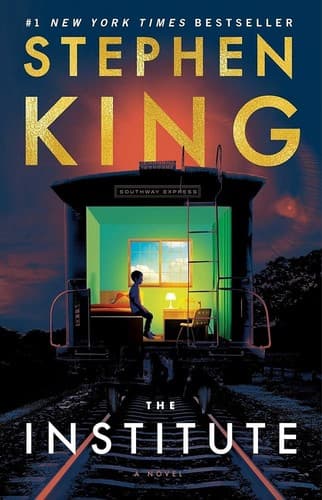
The Institute
Stephen King·2019·Scribner·thriller
Reading level: Ages 16+ (adult) · 11-hour read · Intermediate difficulty.
- Reading time
- 11h
- Difficulty
- Intermediate
- Recommended age
- Ages 16+
- Guide read
- 6min
- Editor's rating
- 4.0 / 5
- stephen-king
- mgm-plus
- the-institute
- psychic-children
- read-before-tv
— In one sentence —
Stephen King's psychic-kid thriller behind the MGM+ series.
§ 01 · WHY READ
Why read
The Institute is Stephen King working in one of his most familiar pressure zones: gifted children, secret power, adult cruelty, and the question of what a child can still protect when the world has already become unsafe. Luke Ellis is kidnapped from his home and taken to a hidden facility where children with telepathic or telekinetic ability are tested, punished, and used.
Stephen King's official television page keeps the MGM+ series route available, and his official novel page identifies Scribner as the publisher. Simon & Schuster lists a current Scribner paperback under ISBN 9781982110581.
Read it before or after the MGM+ series if you want the full scale of Luke's captivity, the uneasy alliances among the children, and King's slower build from institutional horror into resistance.
§ 02 · CHARACTERS
Characters
Luke Ellis is the brilliant kidnapped boy whose intelligence does not protect him from adults with a system behind them.
Avery Dixon is one of the children inside the Institute, and his vulnerability changes the emotional stakes.
Mrs. Sigsby runs the facility with bureaucratic calm and a talent for moral distance.
Tim Jamieson begins outside Luke's story, but his thread becomes part of the larger escape route.
§ 03 · HIGHLIGHTS
Three highlights
No. 1 - Direct MGM+ route. King's official site lists the television adaptation, while the book page anchors the Scribner source.
No. 2 - Classic King child peril. The book sits near Firestarter and It in its use of frightened children facing organized adult power.
No. 3 - Long-form suspense. The novel lets captivity, friendship, and institutional routine build pressure before the action opens up.
§ 04 · EDITIONS
Recommended editions
| Edition | Why pick it |
|---|---|
| Scribner paperback | Current official publisher route, ISBN 9781982110581. |
| Scribner hardcover | Good for King collectors who prefer the first-book feel. |
| Ebook | Convenient for a long thriller with short chapter turns. |
| Audiobook | Useful if you want King's pacing carried by voice. |
§ 05 · FIT
Who it's for / not for
Read this if you are...
- Coming from the MGM+ series.
- Interested in psychic-child stories and secret institutions.
- Looking for recent Stephen King with thriller momentum.
- Comfortable with a long novel that spends time inside fear and captivity.
Skip it if you are...
- Avoiding child endangerment, abduction, medical abuse, or institutional cruelty.
- Looking for a lean horror novella.
- Wanting supernatural rules explained like hard science.
- Sensitive to stories where children are punished by adults.
§ 06 · TIPS
Reading tips
- Track the routines. The horror comes from how normal the Institute makes its procedures feel.
- Watch the children together. Their small loyalties matter as much as any psychic ability.
- Notice Tim's thread. It seems separate at first, then becomes part of the book's structure.
- Compare after the series. Screen versions can tighten the plot, but the novel gives more time to fear, boredom, and resistance.
§ 07 · COMPARE
Read alongside
- Stephen King - It. For another King story about children facing a predatory system.
- Stephen King - The Outsider. For modern King with investigative momentum.
- Stephen King - Salem's Lot. For a different King adaptation route with small-town dread.
- Max Porter - Shy. For a shorter story about a troubled boy under institutional pressure.
- Roald Dahl - The Twits. For a much lighter screen-linked story about cruelty and escape.
§ 08 · DISCUSSION
Discussion questions
- What makes the Institute frightening beyond physical danger?
- How does Luke's intelligence help him, and where does it fail him?
- Which adult characters treat cruelty as procedure rather than choice?
- How does Avery change the emotional center of the book?
- What does Tim's storyline add before it connects to Luke's?
- Where does the book feel closest to King's earlier child-centered horror?
- What should a series preserve from the novel's pacing?
- Does the ending feel like justice, survival, or temporary escape?
One line to remember
“A gifted boy wakes in a facility where children with psychic abilities are treated as assets.”— bibliotecas editorial summary, not a textual quotation
You might also like
Read next
Stephen King · 1986
It
Stephen King's huge Derry horror novel behind the films and HBO's Welcome to Derry.
Read · 6 min
Stephen King · 1983
Pet Sematary
Stephen King's grief-horror novel behind multiple Paramount films.
Read · 6 min
Stephen King · 1974
Carrie
Stephen King's debut novel, newly timed to Prime Video's first Carrie television series.
Read · 6 min