Editor-reviewed
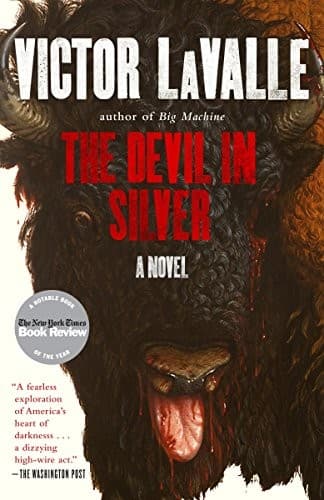
The Devil in Silver
Victor LaValle·2012·One World·thriller
Reading level: Ages 17+ (adult) · 9-hour read · moderate difficulty.
- Reading time
- 9h
- Difficulty
- moderate
- Recommended age
- Ages 17+
- Guide read
- 6min
- Editor's rating
- 4.2 / 5
- victor-lavalle
- amc-adaptation
- the-terror
- horror-fiction
- psychiatric-hospital
— In one sentence —
Victor LaValle's psychiatric-hospital horror novel behind AMC's The Terror: Devil in Silver.
§ 01 · WHY READ
Why read
The Devil in Silver is Victor LaValle's 2012 horror novel about Pepper, a Queens man wrongfully committed to New Hyde Hospital, where patients fear a creature that may not be a delusion. AMC Networks greenlit The Terror: Devil in Silver as a season based on LaValle's novel, and Penguin Random House lists the One World paperback with ISBN 9780812982251.
This is a strong read-before-watch pick because the current AMC and AMC+ window gives the book fresh urgency. The novel works as horror, but it is also about confinement, mental-health systems, friendship, and whether institutions can make people doubt what they know. The creature matters. So does the ward that keeps everyone trapped with it.
Read it if the AMC series put the title on your radar. Skip it if psychiatric confinement or institutional abuse is too much right now.
§ 02 · CHARACTERS
Characters
Pepper is the wrongly committed patient whose anger and confusion pull the reader into New Hyde.
The patients of New Hyde are not background victims. Their alliances and stories give the book its human stakes.
The hospital staff shape the institutional horror, where control can look ordinary from the outside.
The Devil is the creature in the story and also the name for what the hospital lets happen.
§ 03 · HIGHLIGHTS
Three highlights
No. 1 - Current AMC window. The Terror season makes the source timely without needing unsupported rank data.
No. 2 - Horror with institutional weight. The book gives genre readers a monster and a system to fear.
No. 3 - Strong catalog unlock. It links well with LaValle, horror, and screen-adaptation readers.
§ 04 · EDITIONS
Recommended editions
| Edition | Why pick it |
|---|---|
| One World paperback | Stable English route with ISBN 9780812982251. |
| Original hardcover | Good if you collect LaValle's earlier novels. |
| Ebook | Useful for tracking the ward and patient details. |
| Audiobook | Works if you want the dread carried by voice. |
§ 05 · FIT
Who it's for / not for
Read this if you are...
- Coming from AMC's The Terror: Devil in Silver.
- Interested in horror that also critiques institutions.
- Looking for a monster story with literary and social pressure.
- Comfortable with psychiatric-hospital settings and unreliable authority.
Skip it if you are...
- Avoiding confinement, institutional abuse, mental-health trauma, or violence.
- Wanting clean supernatural rules.
- Looking for fast horror with little character work.
- Sensitive to stories where people are not believed.
§ 06 · TIPS
Reading tips
- Take the hospital seriously. New Hyde is as important as the creature.
- Watch how patients verify reality for one another. Belief is part of survival.
- Do not reduce the book to the monster. LaValle is also writing about neglect and power.
- Keep the AMC version separate. The screen season can update structure, but the novel's voice is the source.
§ 07 · COMPARE
Read alongside
- Victor LaValle - The Ballad of Black Tom. External follow-up for LaValle's sharper Lovecraft revision.
- Dan Simmons - The Terror. For another AMC-linked horror source built around isolation.
- Stephen King - Pet Sematary. For screen-famous horror where grief and place trap people.
- Matt Ruff - Lovecraft Country. For horror that keeps historical and social pressure in view.
- Sarai Walker - Dietland. For another screen source about institutions and bodies under control.
§ 08 · DISCUSSION
Discussion questions
- What makes New Hyde frightening before the creature appears?
- How does Pepper change once he has to trust other patients?
- Does the Devil work better as literal horror or institutional metaphor?
- Where does the book make disbelief dangerous?
- How might AMC's version change the novel's structure?
- What does LaValle gain by mixing humor, horror, and social critique?
- Which scenes depend most on being inside Pepper's perspective?
- Is the book more unsettling because the monster is real, or because the hospital is?
One line to remember
“LaValle turns a locked ward into horror, but the monster is only one part of the institution's terror.”— bibliotecas editorial summary, not a textual quotation
You might also like
Read next
Agatha Christie · 1939
And Then There Were None
Ten strangers, one isolated island, and the cleanest demonstration in mystery fiction that a simple setup can still produce unbearable tension.
Read · 6 min
Daphne du Maurier · 1938
Rebecca
A second marriage, a country house, and a dead woman who seems more alive than everyone around her: du Maurier turns jealousy into one of the great slow-burn suspense novels.
Read · 6 min
John le Carre · 1974
Tinker Tailor Soldier Spy
John le Carre's George Smiley mole hunt, the source novel behind the BBC series and 2011 film.
Read · 6 min