Editor-reviewed
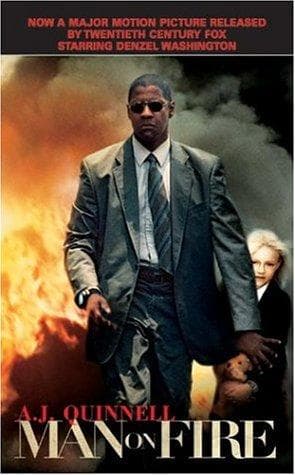
Man on Fire
A. J. Quinnell·1980·William Morrow·thriller
Reading level: Ages 17+ (adult) · 8-hour read · Beginner difficulty.
- Reading time
- 8h
- Difficulty
- Beginner
- Recommended age
- Ages 17+
- Guide read
- 6min
- Editor's rating
- 3.8 / 5
- thriller
- revenge
- bodyguard
- netflix-adaptation
- creasy
— In one sentence —
The first Creasy thriller behind the Netflix series and earlier film versions, built around protection, trauma, and revenge.
§ 01 · WHY READ
Why read
Man on Fire is the source novel that introduced Creasy, the wounded professional protector later reshaped by film and television. Netflix's Tudum page for the current series identifies the show as based on A. J. Quinnell's book series, beginning with the 1980 novel, which makes this the best source-reading entry for viewers trying to separate the page character from later screen mythology.
The book is not a gentle thriller. Its core appeal is direct: a man who has almost given up on himself is pulled back into human attachment, then pushed into violence when that attachment is attacked. Read it as a lean revenge novel with an older paperback-thriller texture, not as a prestige psychological study.
It is useful for bibliotecas because it answers a clear reader question: if the Netflix version or the Denzel Washington film made Creasy feel like a mythic action figure, what did the original novel actually set in motion?
§ 02 · CHARACTERS
Characters
Creasy is the former soldier and bodyguard whose exhaustion is as important as his competence.
The child he protects gives the novel its emotional hinge: Creasy's professional duty becomes personal attachment.
The criminals and handlers around the kidnapping keep the book in revenge-thriller territory rather than mystery mode.
§ 03 · HIGHLIGHTS
Three highlights
No. 1 - First-source value. This is the beginning of the Creasy sequence, so it explains why the character keeps returning to screen.
No. 2 - Direct adaptation bridge. Netflix's series uses the broader Quinnell book route, while the earlier films made the same premise familiar to action audiences.
No. 3 - Low-friction thriller shape. Protection, loss, pursuit, revenge: the reader decision is simple and the book does not pretend otherwise.
§ 04 · EDITIONS
Recommended editions
| Edition | Why pick it |
|---|---|
| William Morrow first edition | Best bibliographic anchor for the 1980 source novel. |
| Avon / tie-in paperback | Practical English reading copy for film and series viewers. |
| Ebook edition | Useful if the paperback is hard to find locally. |
| Audiobook if available | Good for readers who want the story to feel close to action-thriller pacing. |
§ 05 · FIT
Who it's for / not for
Read this if you are...
- Coming from Netflix's Man on Fire or the 2004 film.
- Interested in revenge thrillers with a bodyguard premise.
- Looking for the first Creasy book rather than a later franchise entry.
- Comfortable with older commercial-thriller style.
Skip it if you are...
- Sensitive to kidnapping, child endangerment, or retaliatory violence.
- Looking for a morally gentle action story.
- Expecting the exact tone, setting, or characterization of the screen versions.
- Wanting a literary spy novel rather than a revenge engine.
§ 06 · TIPS
Reading tips
- Read for the source relationship. The book matters because it establishes Creasy before later adaptations revise him.
- Expect period texture. Some pacing and attitudes belong to an older thriller tradition.
- Separate premise from version. The films and Netflix series are not one-to-one replacements for the novel.
- Stop after this if the revenge shape is the only draw. The later series entries are for readers who want more Creasy, not required homework.
§ 07 · COMPARE
Read alongside
- Lee Child - Killing Floor. For another hard-edged action-thriller hero built around competence and escalation.
- James Patterson - Along Came a Spider. For a more procedural thriller franchise entry.
- Harlan Coben - I Will Find You. For a modern Netflix-linked thriller with a parent-child emotional hook.
- Michael Connelly - The Lincoln Lawyer. For legal-thriller structure instead of revenge structure.
- Stieg Larsson - The Girl with the Dragon Tattoo. For a longer, darker commercial thriller with institutional rot.
§ 08 · DISCUSSION
Discussion questions
- How much of Creasy's appeal depends on damage rather than skill?
- Does the book treat revenge as justice, grief, or both?
- What should a modern adaptation keep from the source novel?
- Which screen version changes the premise most sharply?
- How does the protector relationship create reader investment?
- Does the older thriller style help or limit the book now?
- Where does the novel ask for sympathy, and where does it ask for momentum?
- Would this premise work without Creasy as a recurring figure?
One line to remember
“A damaged former operative becomes a child's protector, then turns grief and discipline into a revenge mission.”— bibliotecas editorial summary, not a textual quotation
You might also like
Read next
Agatha Christie · 1939
And Then There Were None
Ten strangers, one isolated island, and the cleanest demonstration in mystery fiction that a simple setup can still produce unbearable tension.
Read · 6 min
Daphne du Maurier · 1938
Rebecca
A second marriage, a country house, and a dead woman who seems more alive than everyone around her: du Maurier turns jealousy into one of the great slow-burn suspense novels.
Read · 6 min
John le Carre · 1974
Tinker Tailor Soldier Spy
John le Carre's George Smiley mole hunt, the source novel behind the BBC series and 2011 film.
Read · 6 min