Editor-reviewed
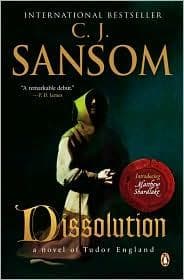
Dissolution
C. J. Sansom·2003·Penguin Books·thriller
Reading level: Ages 14+ (adult) · 8-hour read · Intermediate difficulty.
- Reading time
- 8h
- Difficulty
- Intermediate
- Recommended age
- Ages 14+
- Guide read
- 6min
- Editor's rating
- 4.1 / 5
- historical-mystery
- tudor
- crime-fiction
- hulu-adaptation
- shardlake
— In one sentence —
The first Matthew Shardlake mystery, and the Tudor source novel behind Hulu and Disney+'s Shardlake.
§ 01 · WHY READ
Why read
Dissolution is the first Matthew Shardlake novel and the source door for Hulu and Disney+'s Shardlake. Hulu's press page describes the drama as based on the first novel in C. J. Sansom's Tudor mystery series, and Penguin Random House lists the English paperback with ISBN 9780142004302.
The setup is strong historical crime: in 1537, during Henry VIII's dissolution of the monasteries, lawyer Matthew Shardlake is sent by Thomas Cromwell to investigate a murder at a remote monastery. He arrives as both investigator and political instrument. The monks fear the crown, Cromwell needs results, and the murder is only the first sign that the institution is already breaking.
Read it if you want a historical mystery that uses politics as pressure rather than wallpaper. The book gives the screen series its best engine: a detective who must solve a crime while serving a regime he cannot fully trust.
§ 02 · CHARACTERS
Characters
Matthew Shardlake is the lawyer-investigator, intelligent, cautious, and painfully aware that Cromwell's patronage is both protection and danger.
Jack Barak is the assistant forced into the inquiry, more physical and impulsive than Shardlake.
Thomas Cromwell is the political force behind the mission. He does not need to appear often to shape every choice.
The monastery community supplies suspects, secrets, loyalties, and fear of what reform will cost.
§ 03 · HIGHLIGHTS
Three highlights
No. 1 - Exact series entry. This is Book 1, so viewers can start without decoding a long backlist.
No. 2 - Tudor pressure. The murder matters because the religious and political stakes are already high.
No. 3 - Strong genre fit. Historical mystery, legal investigation, and adaptation demand all point to a full book guide.
§ 04 · EDITIONS
Recommended editions
| Edition | Why pick it |
|---|---|
| Penguin Books paperback | Current English edition with ISBN 9780142004302. |
| Macmillan UK editions | Useful for readers who want the original UK publisher. |
| Ebook | Practical for a mid-length mystery series starter. |
| Audiobook | Good if you like historical atmosphere and dialogue. |
§ 05 · FIT
Who it's for / not for
Read this if you are...
- Coming from Hulu or Disney+'s Shardlake.
- Looking for historical mystery with political stakes.
- Interested in Tudor England beyond court romance.
- Starting a crime series with a clear first case.
Skip it if you are...
- Wanting a fast contemporary thriller.
- Uninterested in religious politics and legal procedure.
- Looking for a cozy monastery mystery.
- Avoiding murder, corruption, and period cruelty.
§ 06 · TIPS
Reading tips
- Keep Cromwell in mind. Shardlake is investigating for power, not outside it.
- Track the monastery as an institution. The setting is not only atmosphere; it is the thing being dismantled.
- Read for pressure, not twists alone. The mystery works because every answer has political cost.
- Start here before later Shardlake books. The series builds on this professional and moral position.
§ 07 · COMPARE
Read alongside
- Hilary Mantel - Wolf Hall. External companion for Cromwell's court from a different angle.
- Umberto Eco - The Name of the Rose. External read-alike for monastery mystery and theology.
- Robert Thorogood - The Marlow Murder Club. A lighter British mystery contrast already in the catalog.
- P. D. James - Death Comes to Pemberley. Historical mystery with a literary setting.
- Colin Dexter - Last Bus to Woodstock. For another British detective series start.
§ 08 · DISCUSSION
Discussion questions
- How does Shardlake's work for Cromwell affect your trust in him?
- Does the monastery feel corrupt, vulnerable, or both?
- Where does the book use history as plot pressure rather than background?
- What makes Barak useful to the investigation?
- Is the mystery stronger because the setting is politically unstable?
- How should a screen adaptation handle Shardlake's interior caution?
- Does the book invite sympathy for the monks?
- Would the story work outside the dissolution of the monasteries?
One line to remember
“A lawyer enters a monastery for Cromwell and finds that reform, faith, and murder are already tangled together.”— bibliotecas editorial summary, not a textual quotation
You might also like
Read next
Agatha Christie · 1939
And Then There Were None
Ten strangers, one isolated island, and the cleanest demonstration in mystery fiction that a simple setup can still produce unbearable tension.
Read · 6 min
Daphne du Maurier · 1938
Rebecca
A second marriage, a country house, and a dead woman who seems more alive than everyone around her: du Maurier turns jealousy into one of the great slow-burn suspense novels.
Read · 6 min
John le Carre · 1974
Tinker Tailor Soldier Spy
John le Carre's George Smiley mole hunt, the source novel behind the BBC series and 2011 film.
Read · 6 min