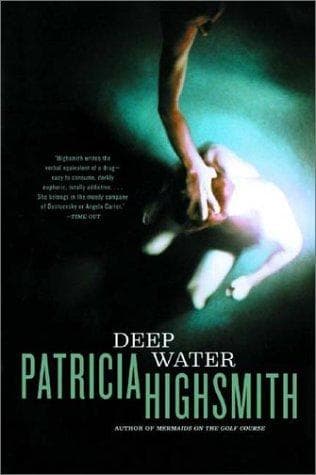
Editor-reviewed
Deep Water
Patricia Highsmith·1957·W. W. Norton·thriller
Reading level: Ages 16+ (adult) · 6-hour read · Intermediate difficulty.
- Reading time
- 6h
- Difficulty
- Intermediate
- Recommended age
- Ages 16+
- Guide read
- 6min
- Editor's rating
- 4.0 / 5
- patricia-highsmith
- psychological-thriller
- hulu-adaptation
- marriage
- crime-fiction
— In one sentence —
Patricia Highsmith's marital thriller behind Hulu's film, built on jealousy, performance, and quiet cruelty.
§ 01 · WHY READ
Why read
Deep Water is Patricia Highsmith's study of a marriage that has curdled into performance, resentment, and violence. Hulu's press page identifies the film as based on Highsmith's novel, and W. W. Norton lists the English paperback with ISBN 9780393324556.
Vic and Melinda Van Allen stay married while Melinda openly takes lovers. Vic appears mild, cultivated, and patient, but his patience is a form of control. He begins hinting that he has killed one of Melinda's former lovers, and the lie changes the social weather around him before violence becomes real.
Read it if you want the book behind Hulu's film but also if you want Highsmith in a different key from Tom Ripley. The novel is less about a clever criminal escaping suspicion than about how an ordinary domestic arrangement can become morally diseased.
§ 02 · CHARACTERS
Characters
Vic Van Allen is outwardly civilized, inwardly possessive, and more frightening because he keeps explaining himself calmly.
Melinda Van Allen refuses to hide her affairs, which makes her both reckless and harder to reduce to Vic's version of events.
The lovers and neighbors form the social stage on which Vic and Melinda punish each other.
The marriage is the real engine: a public arrangement that keeps producing private humiliation.
§ 03 · HIGHLIGHTS
Three highlights
No. 1 - Highsmith's restraint. The violence is less shocking than the ordinary conversations around it.
No. 2 - Hulu source clarity. The adaptation relationship is direct, and the book gives viewers the darker psychological structure.
No. 3 - Short, sour pressure. It is a compact thriller that does not need a detective plot to feel dangerous.
§ 04 · EDITIONS
Recommended editions
| Edition | Why pick it |
|---|---|
| W. W. Norton paperback | Current English edition with ISBN 9780393324556. |
| Virago Modern Classics | Strong UK route for readers collecting Highsmith. |
| Ebook | Good for a concise, tense read. |
| Audiobook | Works if you want the domestic unease carried by voice. |
§ 05 · FIT
Who it's for / not for
Read this if you are...
- Coming from Hulu's Deep Water.
- Interested in psychological crime more than police procedure.
- Reading through Patricia Highsmith after The Talented Mr. Ripley.
- Drawn to stories where politeness hides coercion.
Skip it if you are...
- Wanting a conventional whodunit.
- Avoiding stories about emotional cruelty inside marriage.
- Looking for sympathetic main characters.
- Expecting the film's pacing and emphasis to match the novel closely.
§ 06 · TIPS
Reading tips
- Watch Vic's explanations. His reasonableness is often the danger sign.
- Treat the town as an audience. Reputation gives the marriage part of its power.
- Do not wait for a detective hero. Highsmith is interested in psychology before justice.
- Compare it with Ripley after reading. Both books ask what charm can conceal.
§ 07 · COMPARE
Read alongside
- Patricia Highsmith - The Talented Mr. Ripley. The natural catalog companion for elegant amorality.
- Gillian Flynn - Gone Girl. For a later marital thriller with public performance at its center.
- Gillian Flynn - Sharp Objects. For psychological damage in a tighter crime frame.
- Sarah Perry - The Essex Serpent. For social pressure and desire in a different register.
- Scott Turow - Presumed Innocent. For crime, marriage, and suspicion handled through legal machinery.
§ 08 · DISCUSSION
Discussion questions
- Why does Vic's calm make him more frightening?
- Does the novel make Melinda vulnerable, cruel, or both?
- How does Highsmith use social politeness as pressure?
- When does Vic's lie become a kind of confession?
- Is the marriage already violent before anyone dies?
- What should a screen version preserve from the book's point of view?
- How does Deep Water differ from the Ripley books?
- Does the ending feel like punishment, exposure, or continuation?
One line to remember
“A dead marriage becomes more dangerous because both people keep performing civility.”— bibliotecas editorial summary, not a textual quotation
You might also like
Read next
Patricia Highsmith · 1955
The Talented Mr. Ripley
Patricia Highsmith's crime classic behind Netflix's Ripley and earlier film adaptations.
Read · 6 min
Agatha Christie · 1939
And Then There Were None
Ten strangers, one isolated island, and the cleanest demonstration in mystery fiction that a simple setup can still produce unbearable tension.
Read · 6 min
Daphne du Maurier · 1938
Rebecca
A second marriage, a country house, and a dead woman who seems more alive than everyone around her: du Maurier turns jealousy into one of the great slow-burn suspense novels.
Read · 6 min