Editor-reviewed
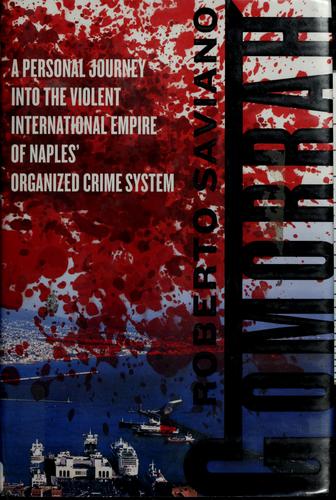
Gomorrah
Roberto Saviano·2006·Picador·Social Science
Reading level: Ages 16+ (adult) · 7-hour read · Advanced difficulty.
- Reading time
- 7h
- Difficulty
- Advanced
- Recommended age
- Ages 16+
- Guide read
- 6min
- Editor's rating
- 4.1 / 5
- roberto-saviano
- hbo-max-adaptation
- italian-crime
- camorra
- investigative-nonfiction
— In one sentence —
Roberto Saviano's Camorra investigation behind the HBO Max crime series.
§ 01 · WHY READ
Why read
Gomorrah is Roberto Saviano's nonfiction investigation of the Camorra and the economic system around organized crime in and beyond Naples. WBD's HBO Max property page identifies the series as based on Saviano's book, and English edition records list the Picador paperback with ISBN 9780312427795.
The book is not a tidy gangster narrative. Saviano writes about ports, factories, fashion, toxic waste, neighborhoods, weapons, money, and the cost of naming what everyone has learned to survive around. That makes it a stronger source guide than a simple "before the show" prompt: the series gives viewers a crime world, while the book insists on the real systems beneath it.
Read it if HBO Max's Gomorrah made you want the nonfiction source. Skip it if you want a conventional true-crime case with one investigation, one detective, and one solved ending.
§ 02 · CHARACTERS
Characters
Roberto Saviano is the reporting presence, moving through places where money and violence have become everyday structure.
Camorra clans and brokers appear less as isolated villains than as parts of a working economy.
Workers, families, and local residents show the human cost of systems that are often discussed only through crime statistics.
Naples and its surrounding region function as more than setting. The book treats place as evidence.
§ 03 · HIGHLIGHTS
Three highlights
No. 1 - Official HBO Max route. WBD identifies the series as based on Saviano's book, giving the guide a clear adaptation relationship.
No. 2 - International catalog value. It adds Italian investigative nonfiction to a screen-adaptation lane often dominated by English-language novels.
No. 3 - Strong reader decision. The guide can warn readers that the book is harder, less glamorous, and more system-focused than many crime dramas.
§ 04 · EDITIONS
Recommended editions
| Edition | Why pick it |
|---|---|
| Picador paperback | Current English route with ISBN 9780312427795. |
| Farrar, Straus and Giroux | Earlier U.S. hardcover path for collectors. |
| Ebook | Useful if you want to move through names and places with search. |
| Audiobook | Best if dense investigative nonfiction works better for you aloud. |
§ 05 · FIT
Who it's for / not for
Read this if you are...
- Coming from HBO Max's Gomorrah.
- Interested in crime as economics, labor, and local power.
- Looking for translated nonfiction with political force.
- Comfortable with violence and institutional bleakness.
Skip it if you are...
- Wanting a single-case true-crime story.
- Avoiding descriptions of murder, intimidation, and corruption.
- Looking for the show's plot in prose form.
- Needing a light crime read.
§ 06 · TIPS
Reading tips
- Read it as systems reporting. The book moves by networks and industries, not by a detective plot.
- Keep geography visible. Ports, roads, neighborhoods, and disposal sites are part of the argument.
- Separate glamour from power. Saviano is often showing how ordinary business language covers violence.
- Use the series as context, not a map. The adaptation and the book do different jobs.
§ 07 · COMPARE
Read alongside
- Truman Capote - In Cold Blood. External follow-up for true crime written as literature.
- Richard Wright - Native Son. For another screen-linked book that treats crime through social pressure.
- Viet Thanh Nguyen - The Sympathizer. For political fiction with crime, state power, and moral compromise.
- Aravind Adiga - The White Tiger. For a sharp novel about class, crime, and economic aspiration.
- Frederick Forsyth - The Day of the Jackal. For a more conventional thriller contrast.
§ 08 · DISCUSSION
Discussion questions
- How does the book change when crime is treated as an economy?
- Which sections feel closest to the HBO Max series, and which feel furthest away?
- What does Saviano gain by writing himself into the investigation?
- Where does the book resist gangster mythology?
- How does translated nonfiction change your sense of place?
- Does the book give readers enough structure, or is its sprawl part of the point?
- What makes a source book different when it is nonfiction?
- How should a screen adaptation handle real-world harm without turning it into style?
One line to remember
“Saviano follows the money, violence, labor, and fear that make the Camorra more than a crime headline.”— bibliotecas editorial summary, not a textual quotation
You might also like
Read next
Patrick Radden Keefe · 2026
London Falling
A narrative nonfiction pick about wealth, danger, family, and a mysterious death in oligarchic London.
Read · 5 min
Jordan Ritter Conn · 2026
American Men
A 2026 nonfiction pick about men, opportunity, pressure, and different ways of trying to thrive.
Read · 5 min
Nur Shkembi (ed.) · 2025
Five Acts of Love
An ACCA exhibition catalogue about love as action, not only romance.
Read · 5 min