Editor-reviewed
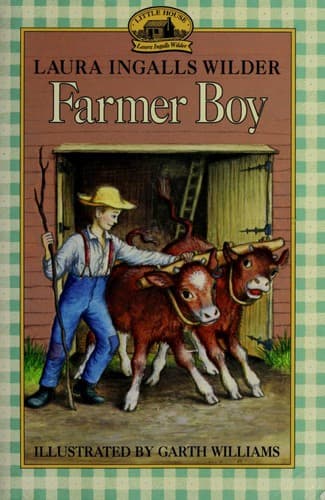
Farmer Boy
Laura Ingalls Wilder·1933·HarperCollins·classic
Reading level: Ages 9–12 (middle grade) · 4-hour read · Beginner difficulty.
- Reading time
- 4h
- Difficulty
- Beginner
- Recommended age
- Ages 9–12
- Guide read
- 6min
- Editor's rating
- 4.0 / 5
- laura-ingalls-wilder
- little-house
- classic
- middle-grade
- netflix-adaptation
— In one sentence —
A self-contained Little House entry about work, appetite, and one hard New York winter.
§ 01 · WHY READ
Why read
Farmer Boy is the second Little House book, but it is not a Laura-in-the-cabin story. It follows Almanzo Wilder as a boy in upstate New York, where farm work, a large household, and a severe winter give the book its shape. That makes it a useful side door into the series for readers who want a complete, short novel rather than a long family sequence.
Netflix's 2026 Little House on the Prairie is based on Laura Ingalls Wilder's book series. This volume is part of that source library, not a confirmed episode-by-episode source for the new show. HarperCollins keeps the nine-book Little House series in print in English.
Read it if the screen adaptation sends you toward the wider Wilder world, especially if you are curious about Almanzo before These Happy Golden Years.
§ 02 · CHARACTERS
Characters
Almanzo Wilder is a capable but impatient farm boy who wants the privileges of being older before he has earned them.
Royal and Eliza Jane are Almanzo's older siblings, whose responsibilities make the family hierarchy visible.
Father and Mother Wilder run the farm with exacting standards, but the book also notices their practical care for the children.
§ 03 · HIGHLIGHTS
Three highlights
- It works as a standalone. You can begin here without knowing the Ingalls books.
- The farm detail is concrete: food, animals, tools, and weather have consequences.
- It gives the Little House sequence a different family and region before Almanzo joins Laura's story.
§ 04 · EDITIONS
Recommended editions
| Edition | Why pick it |
|---|---|
| HarperCollins paperback | A current English series edition, ISBN 9780064400039. |
| HarperCollins full-color edition | A good choice for a younger shared read. |
| Little House boxed set | Best for readers who know they want the full sequence. |
| Audiobook | Useful for a family read, especially during the winter chapters. |
§ 05 · FIT
Who it's for / not for
Read it if you want a middle-grade classic with everyday stakes, farm detail, and a boy narrator. It also suits readers coming to the Netflix series who want to understand the series beyond its most familiar title.
Skip it if you want Laura to be the narrator, a fast plot, or a historically complete account of rural nineteenth-century life. The book is warm and observant, but its point of view is narrow.
§ 06 · TIPS
Reading tips
- Treat the food scenes as part of the book's record of labor, not just comfort.
- Notice how Almanzo measures adulthood through permission and responsibility.
- Read the family discipline with the same critical attention you bring to the frontier setting.
- If you want Laura's timeline, return next to Little House on the Prairie.
§ 07 · COMPARE
Read alongside
- Laura Ingalls Wilder, Little House on the Prairie (available on bibliotecas), for the better-known Ingalls entry.
- Laura Ingalls Wilder, On the Banks of Plum Creek (available on bibliotecas), for the next Laura-centered guide in this batch.
- Louise Erdrich, The Birchbark House (external), for an Ojibwe-centered historical counterpoint.
- Frances Hodgson Burnett, The Secret Garden (external), for another child classic built around place and daily change.
§ 08 · DISCUSSION
Discussion questions
- What does Almanzo think adulthood will give him?
- Which parts of farm life look satisfying, and which look exhausting?
- How does the book show family authority?
- Why might Wilder have set this volume outside Laura's childhood?
- What is left out when the farm is presented through a child's eyes?
- Which routine best reveals the family's values?
- Does the book work without a large central crisis?
- Where would you place it in a first Little House reading plan?
One line to remember
“Almanzo Wilder grows up on a working farm where weather, meals, school, and family rules set the pace.”— bibliotecas editorial summary, not a textual quotation
You might also like
Read next
Laura Ingalls Wilder · 1939
By the Shores of Silver Lake
A quieter Little House move west, where Laura starts to see family change with older eyes.
Read · 6 min
Laura Ingalls Wilder · 1935
Little House on the Prairie
Laura Ingalls Wilder's prairie classic behind Netflix's new adaptation.
Read · 6 min
Laura Ingalls Wilder · 1941
Little Town on the Prairie
Laura reaches adolescence in De Smet, where study, work, and community begin to shape adulthood.
Read · 6 min