Editor-reviewed
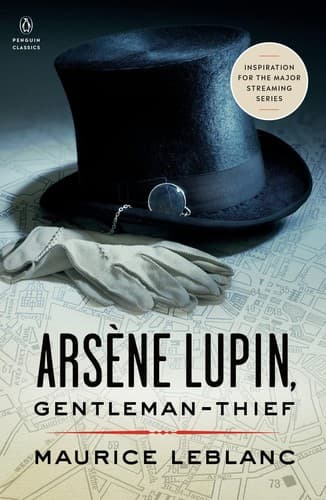
Arsene Lupin, Gentleman-Thief
Maurice Leblanc·1907·Penguin Classics·thriller
Reading level: Ages 13+ (classic) · 6-hour read · moderate difficulty.
- Reading time
- 6h
- Difficulty
- moderate
- Recommended age
- Ages 13+
- Guide read
- 6min
- Editor's rating
- 4.0 / 5
- maurice-leblanc
- lupin
- netflix-series
- classic-mystery
- french-fiction
— In one sentence —
The classic French gentleman-thief stories behind Netflix's Lupin.
§ 01 · WHY READ
Why read
Arsene Lupin, Gentleman-Thief collects Maurice Leblanc's early stories about the French thief who steals with style, nerve, and a taste for theatrical reversals. The book is the source doorway for readers who know the character through Netflix's Lupin.
Netflix/Tudum's current Lupin coverage identifies Assane Diop's obsession with the gentleman thief created by Maurice Leblanc, and Penguin Classics lists an English edition with ISBN 9780143104865. Project Gutenberg also makes early English Lupin texts available in the public domain in the United States.
Read it less as a direct plot map for the Netflix series and more as the rulebook for its pleasures: disguise, confidence, social performance, and the thrill of outsmarting people who underestimate the thief.
§ 02 · CHARACTERS
Characters
Arsene Lupin is the gentleman thief, a criminal hero built from charm, disguises, timing, and nerve.
The police and investigators give the stories their puzzle shape. They often arrive after Lupin has already controlled the stage.
Wealthy victims and rivals bring the class comedy. Lupin's thefts work because he understands pride as well as locks.
Sherlock-adjacent foils show how openly Leblanc plays with the detective tradition.
§ 03 · HIGHLIGHTS
Three highlights
No. 1 - Netflix relevance. Lupin remains an active Netflix franchise, with Part 4 in the 2026 window.
No. 2 - Short-story access. You can read the early Lupin stories in pieces instead of committing to a long novel.
No. 3 - Classic crime energy. The book widens the site from modern thrillers into public-domain crime adventure.
§ 04 · EDITIONS
Recommended editions
| Edition | Why pick it |
|---|---|
| Penguin Classics paperback | Modern English edition with ISBN 9780143104865. |
| Project Gutenberg text | Free public-domain route for early English Lupin material. |
| Collected Lupin editions | Best if you want to follow the character beyond the first set. |
| Library copy before Netflix | Good for sampling the source tradition behind the show. |
§ 05 · FIT
Who it's for / not for
Read this if you are...
- Coming from Netflix's Lupin.
- Interested in classic crime fiction with a playful criminal hero.
- Looking for short stories built around disguises and reversals.
- Curious about French popular fiction before modern heist TV.
Skip it if you are...
- Expecting Assane Diop's exact story.
- Wanting modern psychological realism.
- Avoiding old-fashioned gender and class assumptions.
- Looking for a strict police procedural.
§ 06 · TIPS
Reading tips
- Start with the premise, not continuity. The early stories are built around episodes and reveals.
- Notice performance. Lupin wins by acting before he wins by force.
- Read around the dated parts. Some social assumptions belong to the early twentieth century.
- Separate inspiration from adaptation. Netflix uses the Lupin myth through Assane, not as a page-by-page remake.
§ 07 · COMPARE
Read alongside
- Arthur Conan Doyle - A Study in Scarlet. For the detective tradition Leblanc knowingly plays against.
- Nancy Springer - The Case of the Missing Marquess. For another modern screen route through Sherlock-adjacent fiction.
- Agatha Christie - The Seven Dials Mystery. For lighter classic mystery movement.
- Frederick Forsyth - The Day of the Jackal. For a cooler, later French-set crime machine.
- Karsten Dusse - Murder Mindfully. For a contemporary European crime source with comic nerve.
§ 08 · DISCUSSION
Discussion questions
- What makes Lupin feel heroic despite being a thief?
- How much of his power comes from disguise rather than planning?
- Where do the stories treat theft as class comedy?
- How does Lupin compare with Sherlock Holmes as a figure of intelligence?
- What does Netflix preserve from Leblanc: plot, character type, or tone?
- Which parts of the stories feel dated, and which still move quickly?
- Does the short-story form help the character?
- Why do gentleman-thief stories keep returning to screens?
One line to remember
“A charming thief turns burglary, disguise, and social nerve into a game of intelligence.”— bibliotecas editorial summary, not a textual quotation
You might also like
Read next
Maurice Leblanc · 1910
813
A darker Arsene Lupin novel built around a number, a murder, and a political secret.
Read · 6 min
Maurice Leblanc · 1929
Arsene Lupin Intervenes
A late Lupin casebook where the gentleman thief works through the Jim Barnett disguise.
Read · 6 min
Maurice Leblanc · 1927
Arsene Lupin, Super-Sleuth
A romantic late-Lupin mystery also known as The Girl with the Green Eyes.
Read · 6 min